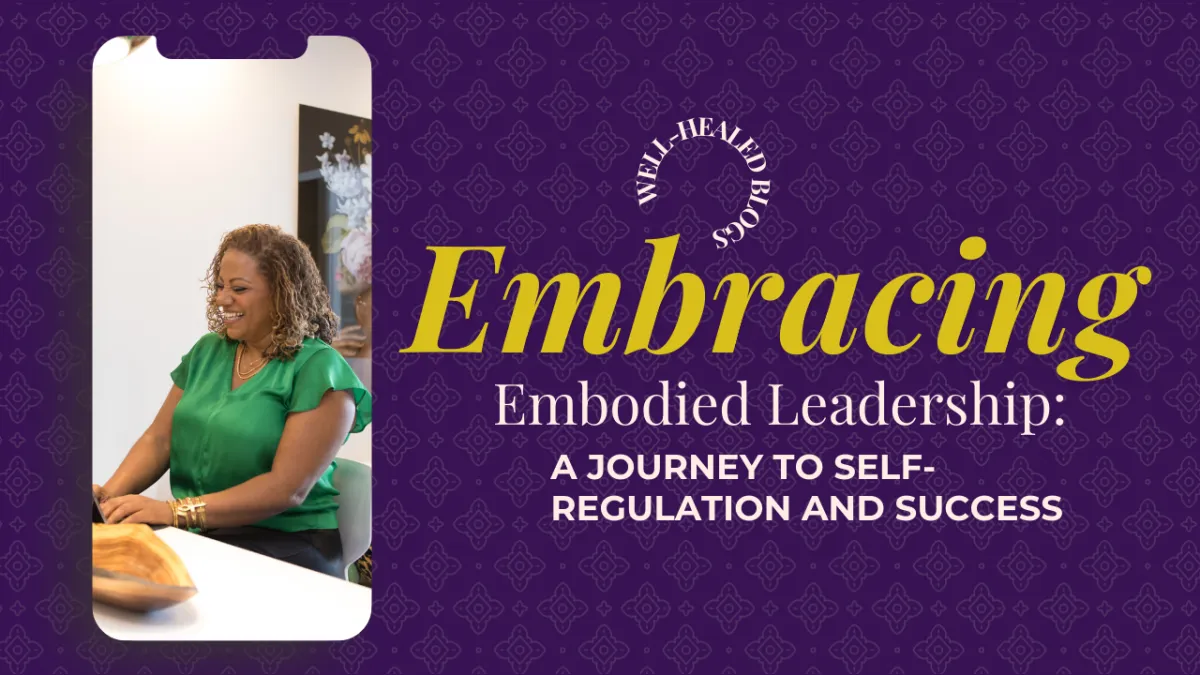
Embracing Embodied Leadership: A Journey to Self-Regulation and Success
The world no longer needs leaders who operate on adrenaline and overdrive. It needs leaders who are grounded, regulated, and deeply connected to themselves—leaders who embody both clarity and compassion.
This is the heart of embodied leadership — a new paradigm that fuses neuroscience, emotional intelligence, and somatic awareness. It’s leadership that begins not in the boardroom, but in the body.
When you learn to regulate your nervous system, you lead not just from your mind, but from your wholeness. And that’s where real power lives.
Understanding Embodied Leadership
Embodied leadership is about more than strategy and skill—it’s about state.
It’s the ability to be aware of what’s happening within you (your emotions, sensations, energy) and use that awareness to lead with presence, clarity, and integrity.
When you’re dysregulated—running on stress, urgency, or people-pleasing—you lead from reactivity. You may look productive, but your body is in survival mode.
When you’re regulated, your body and mind are in sync. You lead with focus, empathy, and intuition. You listen better, think more creatively, and handle challenges with steadiness instead of strain.
Embodiment = Presence + Power + Peace.
The Role of Interoception
One of the most powerful yet overlooked leadership tools is interoception—your ability to sense and interpret internal body signals.
That tightness in your chest before a meeting? The fatigue after pushing through back-to-back calls? Those aren’t inconveniences—they’re communication.
Your body speaks before your burnout does.
Interoception helps you detect early signs of dysregulation—tension, overwhelm, anxiety—and regulate before it becomes depletion. This awareness builds resilience, self-trust, and emotional intelligence—the foundation of embodied leadership.
Because when you can read yourself, you can lead others with compassion and clarity.
The Well-Healed Framework
To practice embodied leadership, we look through the lens of The Well-Healed Framework, built on four essential pillars that bridge healing and high performance:
Beliefs
Your beliefs shape the environment you lead in. Reflect on whether they empower or limit you. A well-regulated leader holds beliefs that support expansion, not fear.Feelings
Emotions are data. They reveal where attention is needed. By learning to name and process emotions, you increase your capacity for empathy, influence, and innovation.Patterns
Notice recurring behaviors—overwork, avoidance, perfectionism. These patterns are learned survival strategies, not your personality. Awareness creates choice.Practices
Rituals and routines that support your nervous system—breathwork, mindfulness, stillness, and boundaries—help anchor regulation as your leadership default.
When these four align, your leadership becomes magnetic, intentional, and sustainable.
Leading with Regulation
True leadership isn’t about pushing harder. It’s about listening earlier.
It’s noticing when your energy dips and pausing before you spiral. It’s taking a breath before reacting. It’s understanding that your nervous system sets the tone for every room you enter.
When you lead from regulation, your presence alone creates safety. Your team feels it. Your clients feel it. You feel it.
And that safety? It’s what allows creativity, collaboration, and innovation to thrive.
Conclusion: Leadership as an Embodied Practice
Embodied leadership is not a trend—it’s a return. A return to wholeness, to wisdom, to the body that’s been guiding you all along.
Your body isn’t sabotaging your success; it’s safeguarding it. It’s showing you when you’ve gone too fast, stretched too thin, or ignored your intuition.
When you begin to lead from regulation, you stop managing chaos and start embodying calm.
You become the kind of leader who doesn’t just direct outcomes—you elevate others through your presence.
Because healing isn’t separate from leadership.
Healing is leadership.
And when you lead from wholeness, success stops feeling like survival—it starts feeling like flow.
