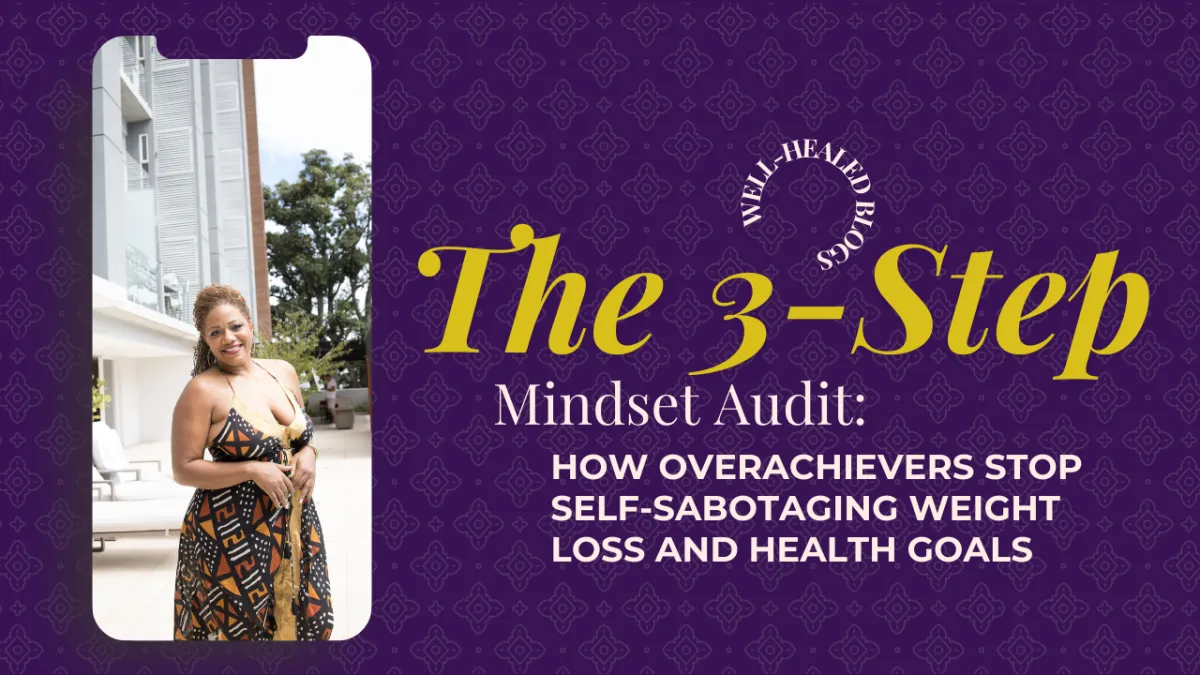
The 3-Step Mindset Audit: How Overachievers Stop Self-Sabotaging Weight Loss and Health Goals
High-achieving women are not lacking discipline, intelligence, or information. We know what to eat. We know we should move our bodies, drink water, and rest. And yet—when it comes to weight loss and health—so many overachievers find themselves stuck in the same cycle: motivated, committed… then off track again.
This isn’t a willpower problem.
It’s a mindset problem.
In a powerful conversation inside Overachievers Anonymous, we explored why knowing what to do isn’t enough—and how a simple 3-Step Mindset Audit can reveal exactly where self-sabotage begins and how to stop it before it derails your progress.
Because sustainable change doesn’t start on your plate.
It starts in your mind.
Why Overachievers Struggle With Weight Loss (Even When They’re Successful Everywhere Else)
Overachievers are experts at pushing through discomfort. That strength serves us in business, leadership, and achievement—but it often backfires in health.
Why?
Because behavior is the last step in the change process, not the first.
Every result follows this sequence:
Thought → Feeling → Behavior → Result
Most people try to change behavior without addressing the thoughts and beliefs driving it. That’s why effort feels exhausting—and short-lived.
To create lasting change, we must audit the mind first.
Step 1: Identify Your Excuses (Before They Disguise Themselves)
Excuses are not failures—they’re protective strategies your brain uses to avoid discomfort.
Common overachiever excuses include:
“I’ll start tomorrow.”
“I’ve had a long day—I deserve this.”
“One time won’t matter.”
“I’m too busy right now.”
These excuses often dress themselves up as reasonable explanations, making them hard to spot. But every excuse reinforces the belief that change is unsafe, difficult, or unsustainable.
Awareness is power. Once you notice the excuse, you regain choice.
Step 2: Expose the Limiting Beliefs Running the Show
Behind every excuse is a belief.
Beliefs like:
“I can lose weight, but I’ll just gain it back.”
“This is just how my body is.”
“I’ve failed too many times for this to work.”
“It’s harder for me than everyone else.”
Your brain is wired to repeat what feels familiar—even if it doesn’t serve you. If your history tells your brain that weight loss doesn’t last, it will unconsciously sabotage follow-through to stay “right.”
Beliefs feel true—but they are optional.
Step 3: Rewrite the Stories That Shape Your Identity
Stories are beliefs repeated long enough to become identity.
“I’m not a morning person.”
“I’m a stress eater.”
“I’m bad at consistency.”
“I always fall off track.”
These stories dictate behavior without your consent.
When a story goes unquestioned, your brain will create evidence to prove it true—again and again. The goal is not to shame the story, but to recognize it and choose differently.
Identity shifts create effortless behavior change.
How to Catch Self-Sabotage Before It Takes Over
Self-sabotage doesn’t start when the plan falls apart—it starts in the thought.
Notice:
When you negotiate with yourself
When you feel overwhelmed or deprived
When “easy” feels safer than aligned
When old patterns feel inevitable
Then ask:
“What thought am I believing right now?”
“Is this true—or just familiar?”
Change begins in that moment.
Letting Go Instead of Starting Over
Weight loss isn’t about losing—it’s about releasing.
Releasing old stories.
Releasing outdated identities.
Releasing beliefs that no longer fit who you’re becoming.
When mindset leads, behavior follows.
When identity shifts, consistency becomes natural.
And when self-trust replaces self-judgment, change finally lasts.
Want the 3-Step Mindset Audit Cheat Sheet?
To support this work, a complimentary 3-Step Mindset Audit Cheat Sheet is available to help you identify:
Your personal excuses
Your limiting beliefs
The stories shaping your habits
This audit is the foundation for sustainable health, weight release, and emotional regulation—especially for overachievers who are tired of trying harder.
Because your next breakthrough won’t come from more effort.
It will come from a new way of thinking.
And that changes everything.
